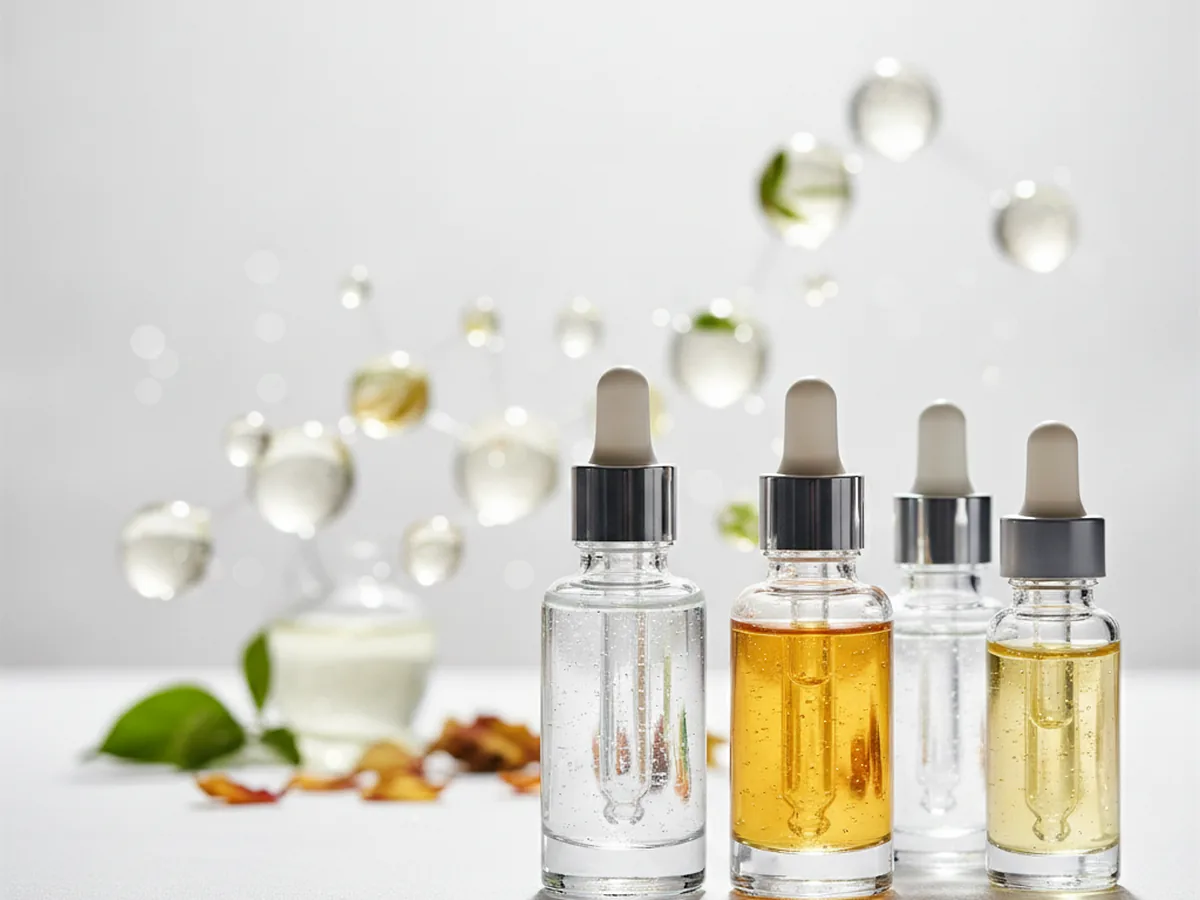
Every year a handful of Korean cosmetic ingredients define the conversation, and 2026 is no exception. Korean industry coverage and brand launches point to four families leading the trend: PDRN, exosome-based actives, advanced peptide complexes, and a renewed wave of fermented ingredients. This article looks at each from a sourcing perspective — what the ingredient is, how brands are positioning it, and what to confirm before you commit — without making efficacy or medical claims.
PDRN: the standout of the year
PDRN (Polydeoxyribonucleotide) moved from professional aesthetic settings into everyday Korean skincare and has become one of the most-requested 2026 actives. Brands position it around recovery and smoothness concepts and are formulating it into serums, ampoules, creams and sheet masks. Because PDRN spans both professional and cosmetic contexts, the sourcing priority is clear documentation: confirm the grade, purity and intended-use statements on the Certificate of Analysis so your product claims stay within cosmetic boundaries for your market.
Exosomes: the science-forward headline ingredient
Exosome-based actives are the science-forward story of 2026, with Korean labs among the most active developers. In cosmetics they are typically described as delivery-oriented actives and appear in essences, ampoules and masks. Exosome sourcing is where terminology and regulation matter most: definitions, source material and permitted claims vary by region, so pin down exactly what the supplier is providing and how it is named on the INCI and label before you design packaging copy.
Peptides: from single actives to multi-peptide complexes
Peptides are not new, but 2026 formulations lean toward multi-peptide complexes marketed around firmness and elasticity concepts. For sourcing, the word 'peptide' alone is not a specification — the specific peptides, their concentration and the carrier system determine cost and sensory feel. Ask the supplier for the exact INCI breakdown of the complex rather than accepting a marketing name, and compare offers on that basis.
Fermented ingredients: a classic K-Beauty technique returns
Fermentation is a signature K-Beauty technique, and fermented filtrates and postbiotics are back in a modern 'bio-fermentation' framing for 2026, positioned around barrier and skin-feel concepts. These ingredients are a strength of the Korean supply base, with many suppliers offering well-characterized filtrates. The sourcing watch-outs are batch-to-batch consistency and clear origin documentation, since fermented materials can vary more than synthetic actives.
| Ingredient family | Typical positioning | Key sourcing question |
|---|---|---|
| PDRN | Recovery and smoothness concepts | Grade, purity and intended-use on the CoA |
| Exosome actives | Delivery-oriented, science-forward | Definition, source and permitted claims by region |
| Multi-peptide complexes | Firmness and elasticity concepts | Exact INCI breakdown and concentration |
| Fermented / postbiotic | Barrier and skin-feel concepts | Batch consistency and origin documentation |
How to brief a supplier on a trending ingredient
Trends are a useful starting point, not a specification. The disciplined move is to translate 'I want PDRN' into a precise brief: the INCI name, the grade, the target concentration, the format, and the documentation you need for your market. That turns hype into a comparable RFQ and lets suppliers propose the right material instead of guessing.
- Lead with the INCI name and grade, not the trade name or the trend headline
- Request a CoA and specification sheet before comparing prices
- Keep product copy to cosmetic concepts — avoid medical or treatment language
- Confirm how the ingredient is named and permitted in each target market
MaterialB sources these trending Korean actives for overseas brands with a sourcing-first approach: pin the INCI, compare specifications on paper, and run a clean RFQ with suppliers who can support export documentation. If one of the families above fits your next product, a tight brief is the fastest path to a real quote.
Source and method: this trend summary is rewritten in our own words from Korean cosmetic-industry news, trend reports and public ingredient-launch coverage for 2025–2026. It describes market positioning and sourcing considerations only, and makes no efficacy, safety or medical claims; confirm permitted claims for your market before publishing product copy.